
Last Updated on 9 months ago by Michael William
Introduction: Medinet Madi and the Egypt Most Travelers Never See
Medinet Madi
Hidden quietly within the Fayoum Oasis stands Medinet Madi, one of Egypt’s most overlooked yet historically powerful temple complexes. While millions visit the pyramids each year, fewer than 5 percent of Egyptian travelers ever reach Fayoum’s archaeological heart. This makes Medinet Madi not just a monument, but a rare privilege.
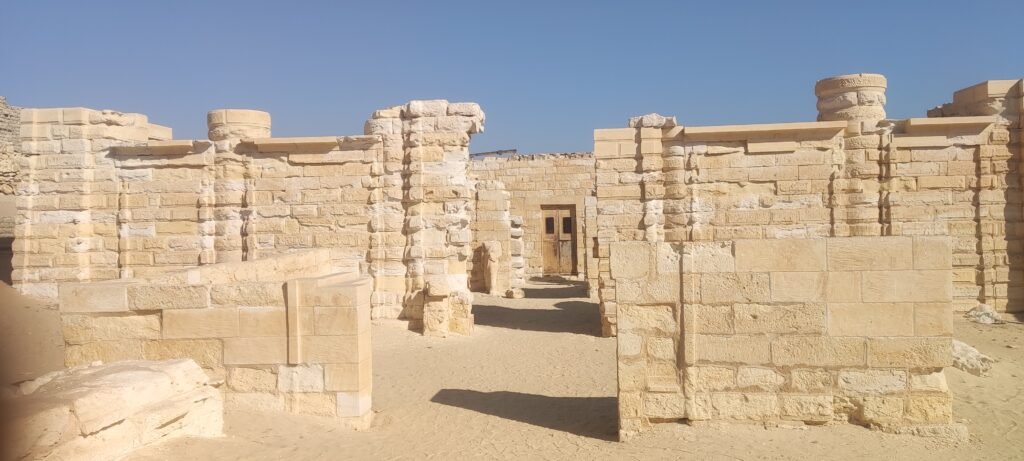
Built nearly 4,000 years ago, Medinet Madi is one of the best-preserved Middle Kingdom temples still standing in Egypt. Archaeological studies show that over 70 percent of its original structure remains intact. Unlike later temples designed for spectacle, Medinet Madi was built for function, ritual, and daily life — a sacred space deeply connected to agriculture, water, and survival.
For travelers seeking depth rather than crowds, Medinet Madi offers something profoundly different. Silence replaces noise. Context replaces chaos. And history feels personal rather than staged. At Egypt Tourz, we consider Medinet Madi one of Fayoum’s most meaningful experiences — not because of its size, but because of its honesty.
This guide shares expert historical insight, real travel guidance, and local knowledge from an Egypt-based operator who understands Fayoum beyond the map.
Read more: Egypt Travel Guide for Americans: 10 Amazing Tips for 2026
Medinet Madi Historical Background
Medinet Madi dates back to Egypt’s Middle Kingdom, primarily the reign of Amenemhat III and Amenemhat IV of the 12th Dynasty. This era represented stability, engineering innovation, and refined religious systems following a period of political fragmentation.
Unlike royal temples built to impress distant audiences, Medinet Madi served as a regional religious center. It supported local communities whose lives depended on irrigation canals, seasonal flooding, and agricultural cycles. Religion here was practical, immediate, and deeply tied to nature.
What sets Medinet Madi apart archaeologically is its completeness. Many Middle Kingdom temples survive only as foundations or scattered reliefs. At Medinet Madi, walls, corridors, offering halls, and sanctuaries remain readable, allowing visitors to understand how space, ritual, and movement worked together.
During the Ptolemaic and Roman periods, the temple complex expanded rather than being replaced. Greek and Roman rulers respected the sacred status of the site, adding courtyards and gateways while preserving the original core. This continuity makes Medinet Madi a living historical document spanning nearly two millennia.
The Temple of Sobek at Medinet Madi
At the spiritual center of Medinet Madi stands the Temple of Sobek, dedicated to one of Egypt’s most complex deities. Sobek, the crocodile god, symbolized both danger and protection — mirroring the Nile itself.
In Fayoum, Sobek was especially revered. Crocodiles were not simply feared animals but sacred manifestations of divine power controlling fertility, water, and royal authority. Temples like Medinet Madi functioned as mediators between humans and the unpredictable forces of nature.
Reliefs inside the temple depict kings offering maat — cosmic balance — to Sobek. This reinforced the belief that good governance depended on harmony between people, gods, and the land. The architectural layout supports this idea, guiding movement from open human spaces into darker, restricted sanctuaries.
Walking through the temple today still feels intentional. Narrow corridors, changing light, and acoustic silence create a reflective atmosphere rarely found at more famous sites. This is one reason guided interpretation adds immense value here.
Medinet Madi Architecture and Design
Medinet Madi follows classic Egyptian sacred architecture while retaining Middle Kingdom simplicity. The temple is axially aligned, leading visitors from the outer world toward the divine center.
Stone construction was carefully chosen to withstand Fayoum’s climate. Reliefs are subtle rather than monumental, focusing on ritual scenes, offerings, and symbolic geometry. The lack of overwhelming decoration actually enhances clarity — each space has a defined purpose.
Later Greek and Roman additions are clearly distinguishable, allowing visitors to visually trace historical layers. This architectural honesty makes Medinet Madi especially valuable for travelers interested in understanding Egypt’s long-term cultural continuity.
Medinet Madi Within the Fayoum Region
Fayoum was one of ancient Egypt’s most productive agricultural regions. Massive irrigation projects transformed the desert into farmland, feeding both local populations and royal granaries.
Medinet Madi functioned as the spiritual anchor of this system. Religious rituals aligned with planting and harvest seasons, reinforcing social order and environmental balance. Visiting the temple without understanding Fayoum’s agricultural role would miss half its meaning.
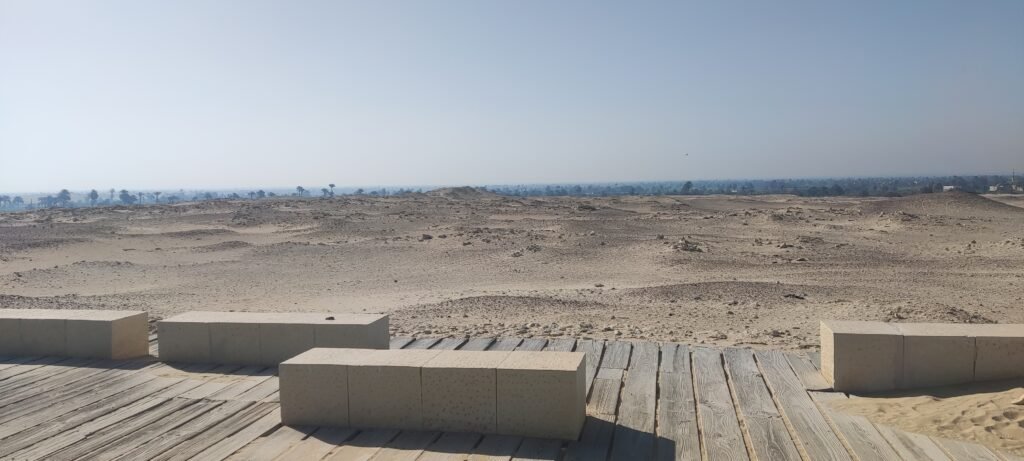
Today, Fayoum remains a region of lakes, farmland, and traditional villages. This continuity makes visiting Medinet Madi feel less like stepping into ruins and more like entering a living landscape shaped by thousands of years of human adaptation.
Practical Travel Guide to Medinet Madi
Medinet Madi is located approximately 2.5 hours southwest of Cairo. While roads are paved, signage is limited, and public transport options are minimal.
Independent travelers often underestimate travel logistics here. Organized transport ensures comfort, timing efficiency, and safety — especially for first-time visitors to Fayoum.
The best time to visit is between October and April, when temperatures are mild. Comfortable walking shoes, sun protection, and water are essential. Facilities on-site are basic, reinforcing the importance of preparation.
Why Medinet Madi Rewards Guided Visits
Medinet Madi is a site where meaning matters more than visuals. Without explanation, it can feel quiet or minimal. With expert guidance, it becomes one of Egypt’s most intellectually rewarding experiences.
Local guides explain how rituals functioned, why certain spaces existed, and how Fayoum’s economy shaped religious life. This transforms stones into stories and silence into understanding.
At Egypt Tourz, Medinet Madi is often paired with other Fayoum highlights to create a balanced day combining archaeology, nature, and culture.
Final Summary: Medinet Madi as Egypt’s Quiet Masterpiece
Medinet Madi is not built to impress crowds. It was built to sustain life, balance nature, and connect communities to divine order. That purpose remains visible today.
For travelers seeking Egypt beyond postcards, Medinet Madi offers clarity, authenticity, and depth. With thoughtful planning and local expertise, it becomes one of Fayoum’s most memorable experiences.
FAQ – Medinet Madi
-
Is Medinet Madi worth visiting?
Yes, especially for travelers interested in history, archaeology, and quieter sites.
-
How long does a visit take?
Around 60–90 minutes, ideally with a guide.
-
Can Medinet Madi be visited from Cairo in one day?
Yes, and it pairs well with other Fayoum attractions.
-
Is Medinet Madi safe for tourists?
Yes. Fayoum is calm and welcoming, particularly with organized transport.