
Last Updated on 10 months ago by Michael William

Introduction: Why Medinet Madi Matters in Egyptian History
When studying ancient Egypt, most narratives jump quickly from the pyramids to Luxor. This leap often skips the Middle Kingdom, a period many Egyptologists see as the true foundation of Egypt’s long-term stability.
At the heart of this era stands Medinet Madi. It is one of the most complete surviving temples from this formative age.
Medinet Madi is important not because it was massive or dramatic. It matters because it was functional. The temple shows how religion, agriculture, and governance worked together at a regional level.
Unlike later imperial temples built for spectacle, Medinet Madi served local communities. These communities depended on water control, seasonal cycles, and agricultural planning.
For travelers and researchers alike, understanding Medinet Madi reveals the quiet power of the Middle Kingdom. It also deepens appreciation for Fayoum as one of Egypt’s most carefully managed landscapes.
Read more: Medinet Madi Guide: Fascinating Power Temple 2026
Origins of Medinet Madi in the Middle Kingdom
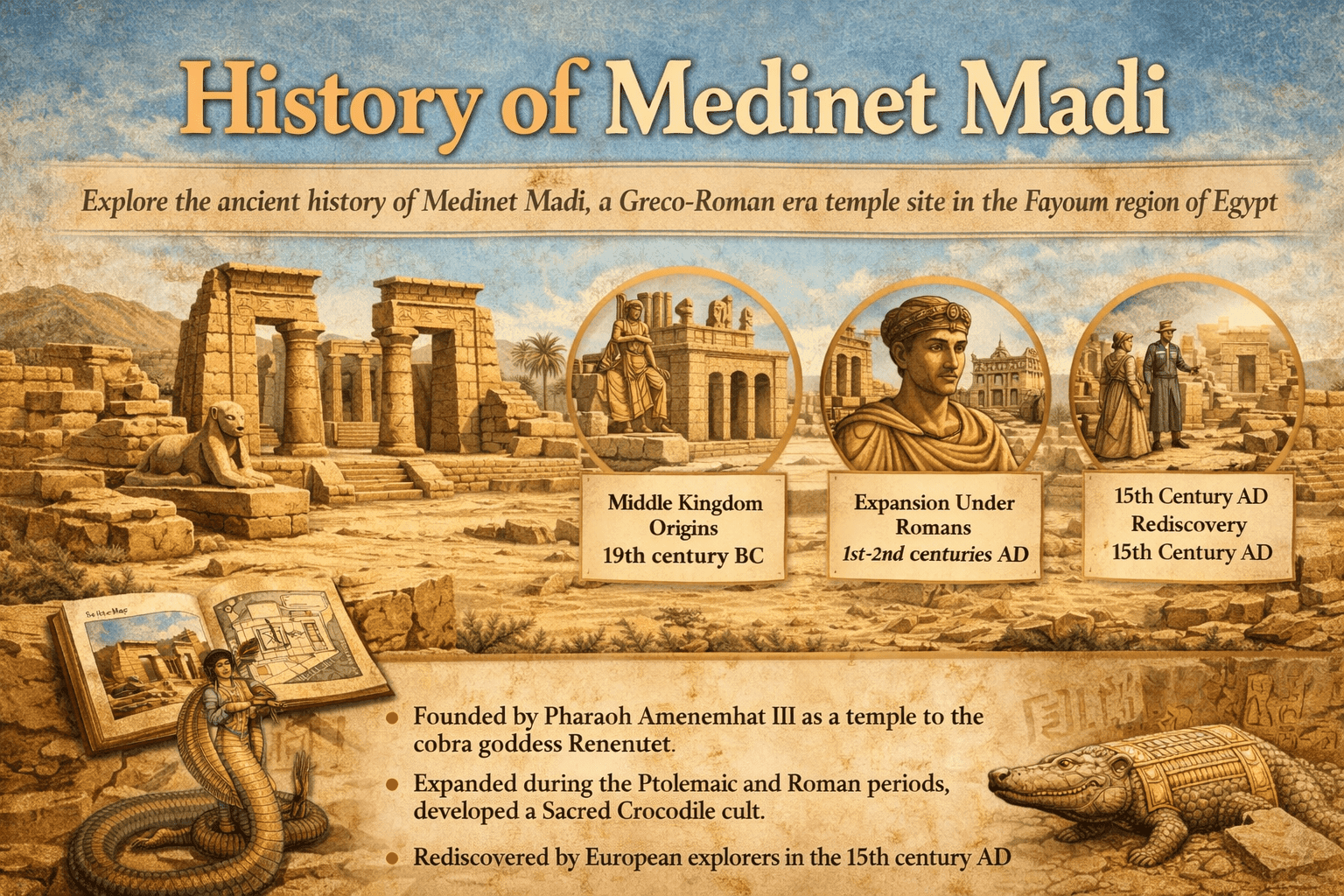
Medinet Madi was founded during the reign of Amenemhat III, one of the strongest rulers of the 12th Dynasty. His rule marked a high point in administration, engineering, and agricultural expansion.
Fayoum was central to this vision. Large-scale irrigation projects transformed the region into Egypt’s agricultural heartland. Canals and water systems regulated Lake Moeris and surrounding farmland.
Medinet Madi functioned as the spiritual anchor of this system. The temple was closely tied to water management and seasonal cycles.
Unlike royal mortuary temples, it was designed for continuous ritual use. Priests performed ceremonies linked to planting, harvests, and water levels.
This practical religious role explains why the temple remained important long after its founding.
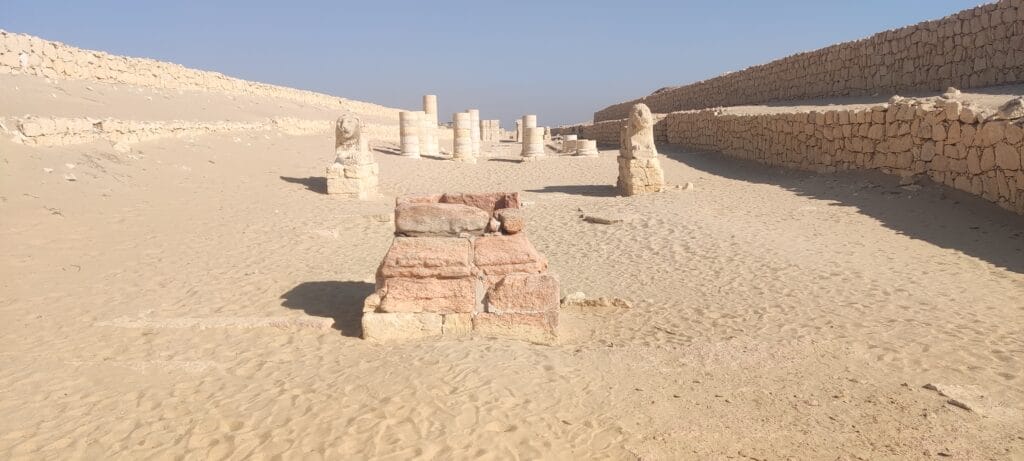
Architecturally, the Middle Kingdom core of Medinet Madi remains remarkably intact. Corridors, walls, and sanctuaries still reflect their original layout. Few sites offer such a clear view of early temple function before New Kingdom monumentality.

Religious Purpose and Local Governance
Religion during the Middle Kingdom was deeply connected to daily life. At Medinet Madi, worship focused on Sobek, the crocodile god linked to water, fertility, and royal protection.
In Fayoum, Sobek’s role was not symbolic. He represented survival itself.
The temple also served an administrative function. Priests acted as intermediaries between the state and local communities. They managed land, resources, and ritual calendars.
This made Medinet Madi both a religious center and a bureaucratic institution.
Inscriptions emphasize balance and order rather than conquest. This reflects Middle Kingdom values, where stability mattered more than expansion or propaganda.
Ptolemaic Expansion and Cultural Continuity
During the Ptolemaic period, Medinet Madi experienced significant expansion. Greek rulers added courtyards, gateways, and inscriptions.
What stands out is continuity rather than disruption. Earlier Egyptian traditions were respected and preserved.
Sobek worship was not replaced. Instead, it was integrated into the new political system.
Because of this approach, the temple remained active into the Roman period. Greek, Demotic, and Roman elements coexist naturally.
Roman Presence and the Final Phase
Under Roman rule, Fayoum remained agriculturally valuable. Medinet Madi continued functioning as a local religious center, though at a reduced scale.
Roman architectural elements are present but restrained. This suggests adaptation rather than domination.
Over time, changes in religion and economy led to the gradual abandonment. The temple was not violently destroyed.
This slow decline helped preserve the site. Sand and isolation protected what human activity no longer used.
Archaeological Rediscovery and Modern Research
Systematic archaeological work began in the 20th century, led mainly by Italian-Egyptian missions. The focus was preservation rather than reconstruction.
This careful approach maintained the site’s authenticity.
Scholars value Medinet Madi for its clarity. Few Middle Kingdom temples remain so readable without heavy later interference.
Today, the site is recognized as one of the most important non-royal temples of the period. Its scholarly value continues to grow.
Why This History Matters for Visitors Today
Understanding Medinet Madi changes how visitors experience the site. Quiet stone corridors become evidence of organized life, belief, and environmental control.
For travelers seeking more than photographs, the temple offers context and depth.
Exploring Medinet Madi with knowledgeable local experts reveals how ancient Egyptians balanced religion, nature, and governance.
This is why Medinet Madi still matters today.
Final Takeaway
Medinet Madi proves that Egypt’s greatness was not built by pyramids alone. Regional centers sustained daily life and long-term stability.
The temple reflects balance, adaptation, and continuity. These values defined ancient Egypt at its strongest.
FAQ – History of Medinet Madi
Q: When was Medinet Madi built?
A: Medinet Madi was originally built during Egypt’s Middle Kingdom, mainly under the reign of Amenemhat III of the 12th Dynasty, around the 19th century BCE.
Q: Why is Medinet Madi so well preserved?
A: Large portions of its original structure remain intact. Unlike many Middle Kingdom temples, it preserves full corridors, walls, and sanctuaries.
Q: What was the main purpose?
A: It served as a regional religious and administrative center tied to agriculture, water management, and local governance.
Q: Was the temple used after the Middle Kingdom?
A: Yes. It remained active during the Ptolemaic and Roman periods, with expansions rather than abandonment.
Q: How does it differ from New Kingdom temples?
A: Medinet Madi focuses on function and balance. New Kingdom temples emphasize scale, power, and imperial ideology.
Q: Why is it important to understand Fayoum?
A: The temple explains how Fayoum functioned as an integrated agricultural and administrative system.
Q: Is Medinet Madi worth visiting for non-historians?
A: Yes. It offers insight into everyday ancient life beyond famous monuments.